
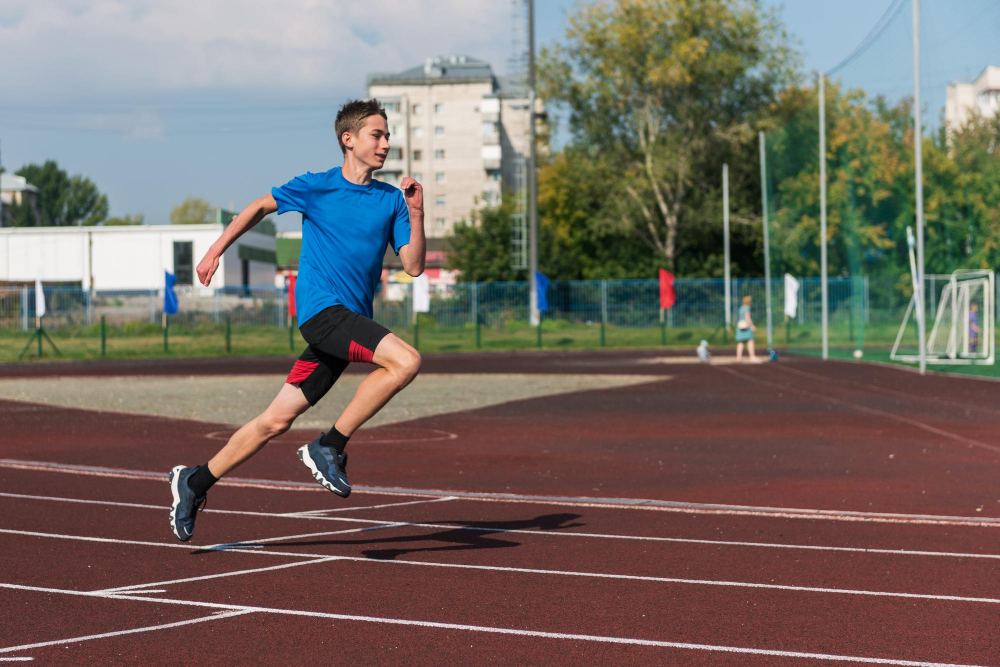
Athletics encompasses a wide range of events from sprints and distance running to jumps and throws. A comprehensive coaching process ensures holistic development, technical mastery, and peak performance tailored to each athlete’s discipline and goals.
Objective: Understand the athlete’s background, physical fitness, and specialization.
Physical screening: posture, mobility, endurance, strength.
Identify preferred events: track (sprint, middle/long-distance), field (jump, throw), or combined.
Analyze previous performances or competition history.
Discuss goals: school-level, state, national, or elite competition.
Objective: Create a structured roadmap with progressive training phases.
Set short-term (technique), mid-term (performance), and long-term (competitive) goals.
Use periodization: Pre-season, In-season, Competition, and Recovery phases.
Customize plans based on age, experience, and event.
Track progress with measurable metrics (e.g., timings, jump height, throw distance).
Objective: Master the biomechanics and event-specific techniques.
Sprints: Starts, acceleration, stride length, drive phase.
Distance Running: Pacing, aerobic conditioning, race strategy.
Jumps: Take-off, flight, landing for long jump, high jump, triple jump.
Throws: Grip, stance, release mechanics for shot put, javelin, discus.
Drills and video analysis to correct form and increase efficiency.
Objective: Build strength, agility, and power to enhance performance.
Event-specific strength programs (e.g., explosive power for sprinters and throwers).
Core stability, plyometrics, and functional fitness.
Resistance training and bodyweight workouts.
Focus on injury prevention through mobility and muscle balance.
Objective: Improve stamina, speed, and recovery.
Speed training: Intervals, sprints, agility drills.
Endurance training: Tempo runs, long-distance, fartlek sessions.
Recovery protocols: Active rest, cooldowns, and nutrition.
Heart rate monitoring and lactate threshold testing (if applicable).
Objective: Build confidence, discipline, and competitive mindset.
Visualization, mindfulness, and breathing techniques.
Goal visualization before events or training.
Overcoming performance anxiety and mental fatigue.
Post-race analysis and mindset coaching.
Objective: Fuel the athlete for optimal performance and recovery.
Educate on balanced diet, hydration, and supplements (if needed).
Tailor nutrition plans based on training load and body composition.
Sleep, recovery, and stress management strategies.
Promote healthy daily routines and discipline.
Objective: Track improvement and make data-driven adjustments.
Use timing systems, jump/throw measurements, and video analysis.
Compare performance metrics with past results and targets.
Provide constructive feedback and technical adjustments.
Encourage athlete self-assessment and ownership of progress.
Objective: Train athletes for peak performance under pressure.
Simulated events and mock meets to rehearse competition scenarios.
Warm-up, cooldown, and injury management protocols.
Event-specific strategies (e.g., lane control for sprints, pacing for distance).
Prepare mental routines for high-pressure situations.
Objective: Ensure sustainable progression and career longevity.
Focus on multi-sport development in early stages to avoid burnout.
Transition plans from youth to elite-level training.
Leadership, sportsmanship, and mentoring opportunities.
Provide exposure to scholarships, club participation, and national selections.