
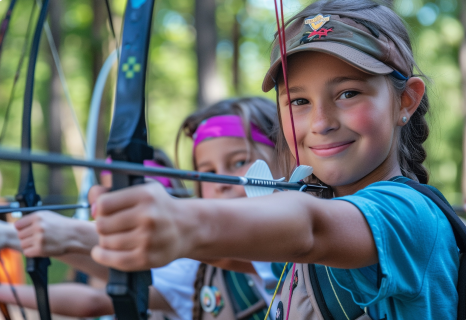
Archery coaching is a blend of technical refinement, physical conditioning, and mental control. A systematic coaching process ensures archers develop consistency, accuracy, and confidence, whether they aim to shoot recreationally or compete at elite levels.
Objective: Understand the archer’s current skill level, physical attributes, and goals.
Determine dominant eye, hand preference, and body alignment.
Assess current shooting technique, posture, and equipment handling.
Identify strengths, areas for improvement, and training history.
Discuss short- and long-term goals: hobby, school-level, or professional competition.
Objective: Create a personalized development roadmap.
Set SMART goals (Specific, Measurable, Achievable, Relevant, Time-bound).
Develop a structured training schedule with daily/weekly targets.
Incorporate physical training, technical drills, and mental coaching.
Align training with competition calendars (if applicable).
Objective: Master fundamental and advanced shooting mechanics.
Stance & Posture: Establish a stable base and consistent body alignment.
Nocking & Hooking: Teach proper arrow placement and finger positioning.
Draw & Anchor: Ensure smooth draw and consistent anchor point.
Aiming & Release: Train on sight alignment, focus, and clean release.
Follow-Through: Reinforce a steady, balanced finish after each shot.
Video analysis and slow-motion review can help identify and correct form issues.
Objective: Ensure the archer is confident with and properly fitted to their gear.
Train on bow selection: recurve, compound, or traditional.
Teach arrow spine, bow draw weight, and brace height tuning.
Instruct on equipment maintenance, string replacement, and sight calibration.
Encourage personalized adjustments for grip and stabilizers.
Objective: Build strength, endurance, and stability essential for shooting.
Strength Training: Focus on shoulders, back, arms, and core.
Flexibility & Range of Motion: Stretching routines for smooth draw cycles.
Balance & Coordination: Exercises to enhance body control and posture.
Cardiovascular Fitness: Improve stamina for competition rounds.
Regular physical conditioning helps prevent fatigue and injuries.
Objective: Sharpen concentration, emotional control, and resilience.
Teach visualization and mental rehearsal before each shot.
Use mindfulness and breathing techniques to maintain calm.
Develop pre-shot routines to build consistency and reduce anxiety.
Train under simulated pressure to improve composure during events.
Objective: Reinforce muscle memory and improve shot consistency.
Include blank bale shooting to focus on form without aiming.
Practice grouping drills, distance variation, and score-focused sets.
Track performance with logbooks or digital scoring apps.
Rotate between structured repetition and game-like simulations.
Objective: Prepare archers mentally and physically for tournaments.
Review competition format, rules, and scoring systems.
Plan nutrition, warm-up routines, and gear checks.
Develop shot pacing, rhythm, and recovery techniques.
Emphasize focus management and coping strategies during high-pressure rounds.
Objective: Monitor progress and fine-tune the coaching approach.
Use scorecards, video review, and target analysis for feedback.
Hold periodic progress meetings with archers and/or guardians.
Adjust training based on growth, fatigue, or changing goals.
Celebrate milestones to keep motivation high.
Objective: Build a committed, confident, and self-aware archer.
Encourage self-reflection and ownership of progress.
Introduce team-building and leadership opportunities in clubs.
Promote participation in workshops and higher-level coaching camps.
Foster a love for the sport and values like patience, discipline, and respect.